Physical Commodity Trading Explained: How Real Goods Move From Producer to Market

Physical commodity trading defined Physical commodity trading is the buying and selling of actual physical goods — crude oil, copper, grain, coal — for real delivery, as opposed to financial contracts that settle in cash without any physical exchange. Physical traders source commodities at the point of production, arrange shipping and storage, and deliver them […]
Spot Market vs Futures Market: Key Differences Explained with Examples

Spot market vs futures market defined The spot market is where commodities are bought and sold for immediate delivery and settlement — typically within two business days (T+2). The futures market is where standardised contracts are bought and sold for delivery at a specified future date and price. The difference in price between spot and […]
What Is Warehouse Receipt Financing? How Stored Commodities Unlock Credit

Warehouse receipt financing defined Warehouse receipt financing is a form of secured lending where a commodity in storage serves as collateral for a loan. A producer or trader stores a commodity in a licensed warehouse, receives an official receipt documenting ownership of that specific quantity and grade of commodity, and pledges that receipt to a […]
What Is Backwardation in the Oil Market?
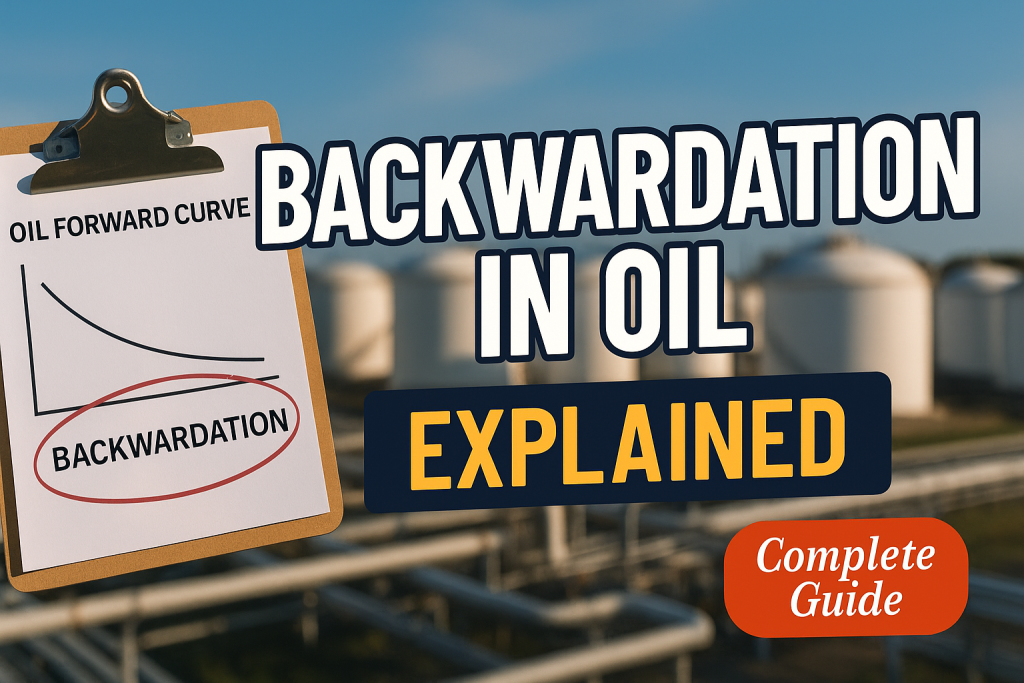
Backwardation in the oil market defined Backwardation in the oil market occurs when the spot price or near-term futures price for crude oil is higher than prices for delivery further in the future. The forward curve slopes downward rather than upward. Backwardation signals that the physical oil market is tight — buyers are paying a […]
The Commodity Forward Curve Explained: Definition, Structure, and How Traders Use It

Commodity forward curve defined A commodity forward curve (also called a futures price curve) is a graph showing futures prices at different delivery dates for the same commodity. If crude oil costs $80/barrel for delivery next month but $83/barrel for delivery in six months, the curve slopes upward — this is called contango. If near-term […]
Commodity Fundamental Analysis: A Practical Guide for Traders
Commodity fundamental analysis defined Commodity fundamental analysis is the process of understanding supply and demand factors to form a view on where a commodity price is likely to go. Unlike technical analysis (which studies price charts), fundamental analysis asks: who produces this commodity, how much, and is supply growing or shrinking? Who consumes it, how […]
What Is a Commodity Pool Operator (CPO)? Definition, Registration, and Key Distinctions

Commodity pool operator defined A commodity pool operator (CPO) is a person or entity that operates or solicits funds for a collective investment vehicle — a “commodity pool” — that trades in commodity interests, including futures contracts, options on futures, swaps, and foreign exchange. CPOs are regulated by the Commodity Futures Trading Commission (CFTC) in […]
History of Commodity Prices: Super-Cycles, Price Shocks, and What Drives Long-Term Trends

Commodity price history defined Commodity prices move through long-term cycles — often called super-cycles — that last 10-20 years and are driven by major structural shifts in global supply and demand. Between super-cycles, commodity prices spend extended periods in bear markets as supply builds to meet demand. The major episodes that shaped modern commodity markets […]
Contango Explained: What It Is, What Causes It, and Why It Matters

Contango defined Contango is a condition in commodity futures markets where the price of a futures contract is higher than the current spot price for the same commodity. It is the normal state for most physical commodities because buyers are willing to pay more for future delivery than for immediate delivery. That premium reflects the […]
What Is an Inter-Commodity Spread? A Plain-English Guide for Commodity Markets

Inter-commodity spread defined An inter-commodity spread is a market position that is simultaneously long (buying) one commodity and short (selling) a different but related commodity. The goal is not to bet on whether prices rise or fall — it is to capture or protect the price relationship between the two. Physical processors such as oil […]